3 Small Interior Design Changes That Make a Room Look More Expensive
A room does not need a full redesign, a new sofa or a completely different colour scheme to feel more expensive. Quite often, it is the quieter decisions — scale, repetition and lighting — that make a space feel properly considered.
If your living room feels almost right but still a little unfinished, these three small interior design changes are a useful place to start.

1. Scale Up Your Rug
One of the quickest ways to make a living room look more expensive is to get the proportions right — and the rug has a surprisingly big part to play.
A rug that is too small can leave the furniture looking as though it is floating around the room. A larger rug creates a visual foundation, connects the main pieces of furniture and makes the layout feel deliberate rather than accidental.
As a starting point, think about the rug as part of the furniture arrangement rather than an accessory placed in the middle of it. Let the sofa and chairs relate to it so the seating area reads as one composition.

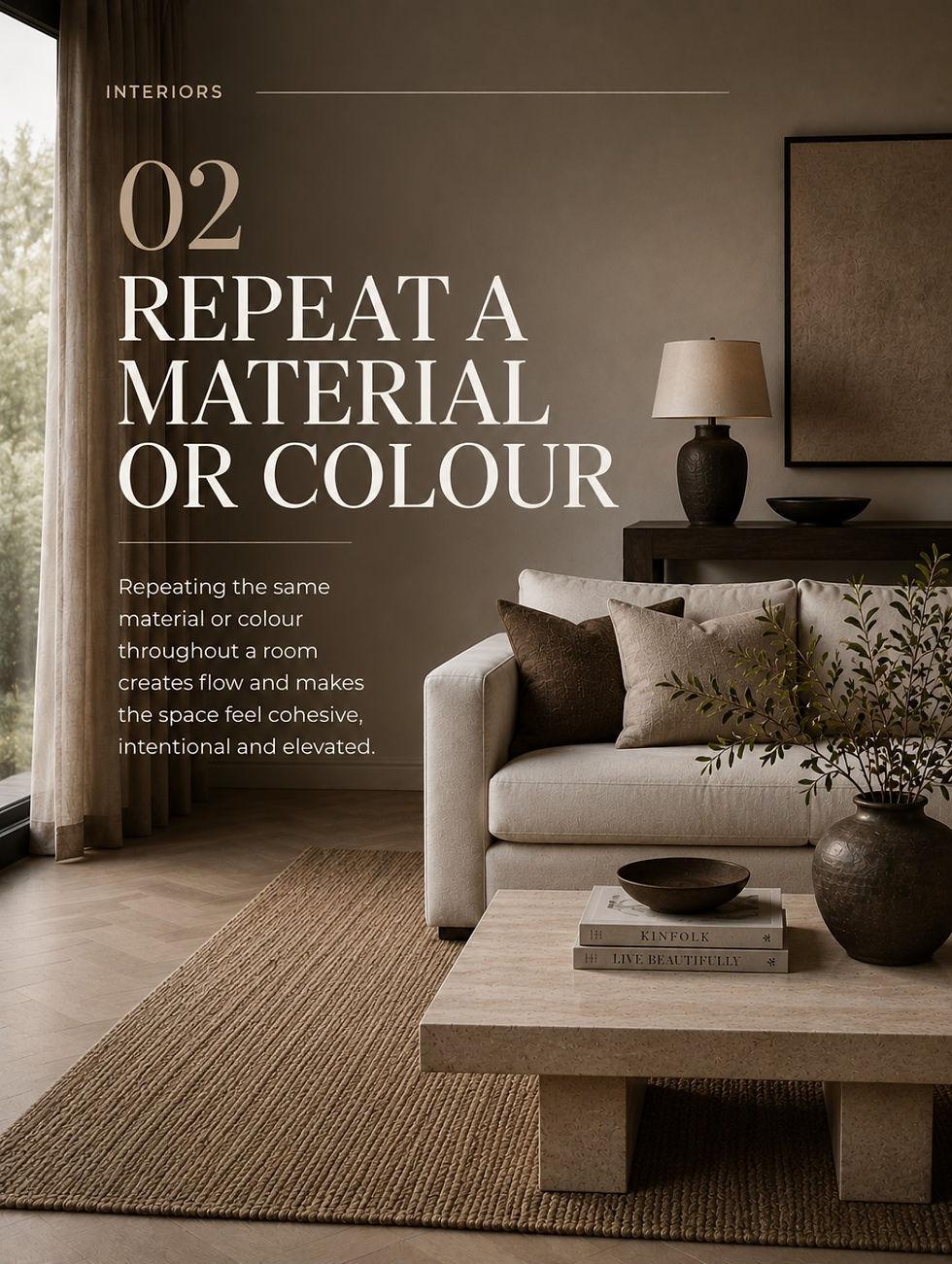
2. Repeat a Material or Colour
Rooms that feel polished rarely contain dozens of unrelated finishes competing for attention. Instead, there is usually a thread running through them.
Choose a small number of colours or materials and let them appear more than once. That might be a dark timber echoed in a side table and picture frame, warm stone repeated in a coffee table and decorative object, or the same soft neutral picked up across upholstery, curtains and cushions.
The aim is not to make everything match. It is to create enough repetition that the eye understands the room as a whole. That sense of continuity is what makes a space feel calm, cohesive and intentional.
3. Layer Your Lighting
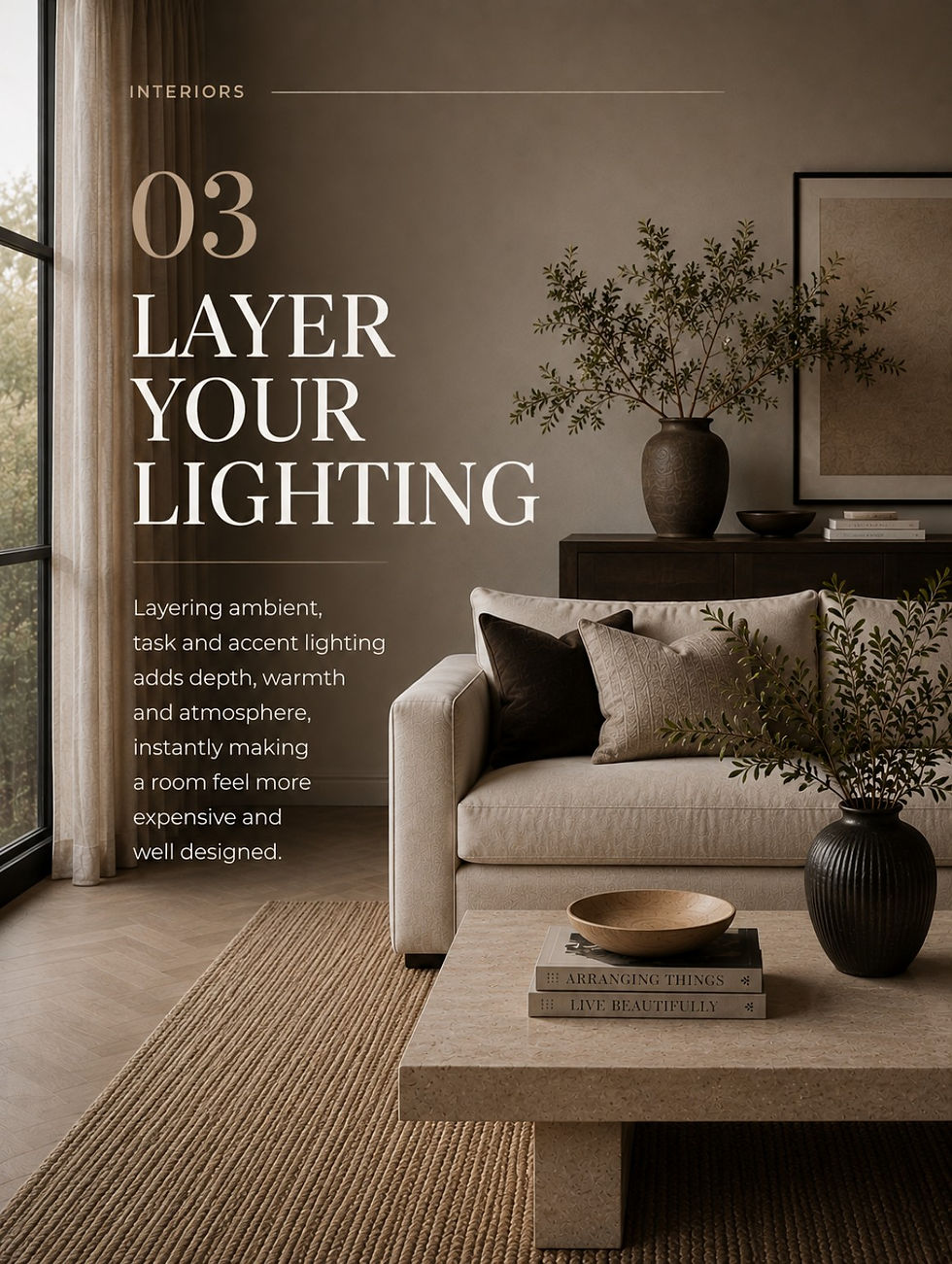
Lighting changes how every other design decision in a room is experienced. Relying on one ceiling light can flatten even a beautifully furnished space, while several light sources create depth and atmosphere.
Think in layers: ambient lighting for the room as a whole, task lighting where you read or work, and accent lighting to draw attention to artwork, shelving or architectural details. Lamps at different heights are particularly useful for creating softer pools of light in the evening.
You are not simply making the room brighter. You are giving it dimension — and that can make even familiar furniture and finishes feel much more considered.
Small Changes, Big Impact
The most successful interiors are not always the ones with the biggest budgets or the most dramatic transformations. Often, they are the rooms where the details have been thought through: the proportions feel right, materials speak to one another and the lighting changes with the way the room is used.
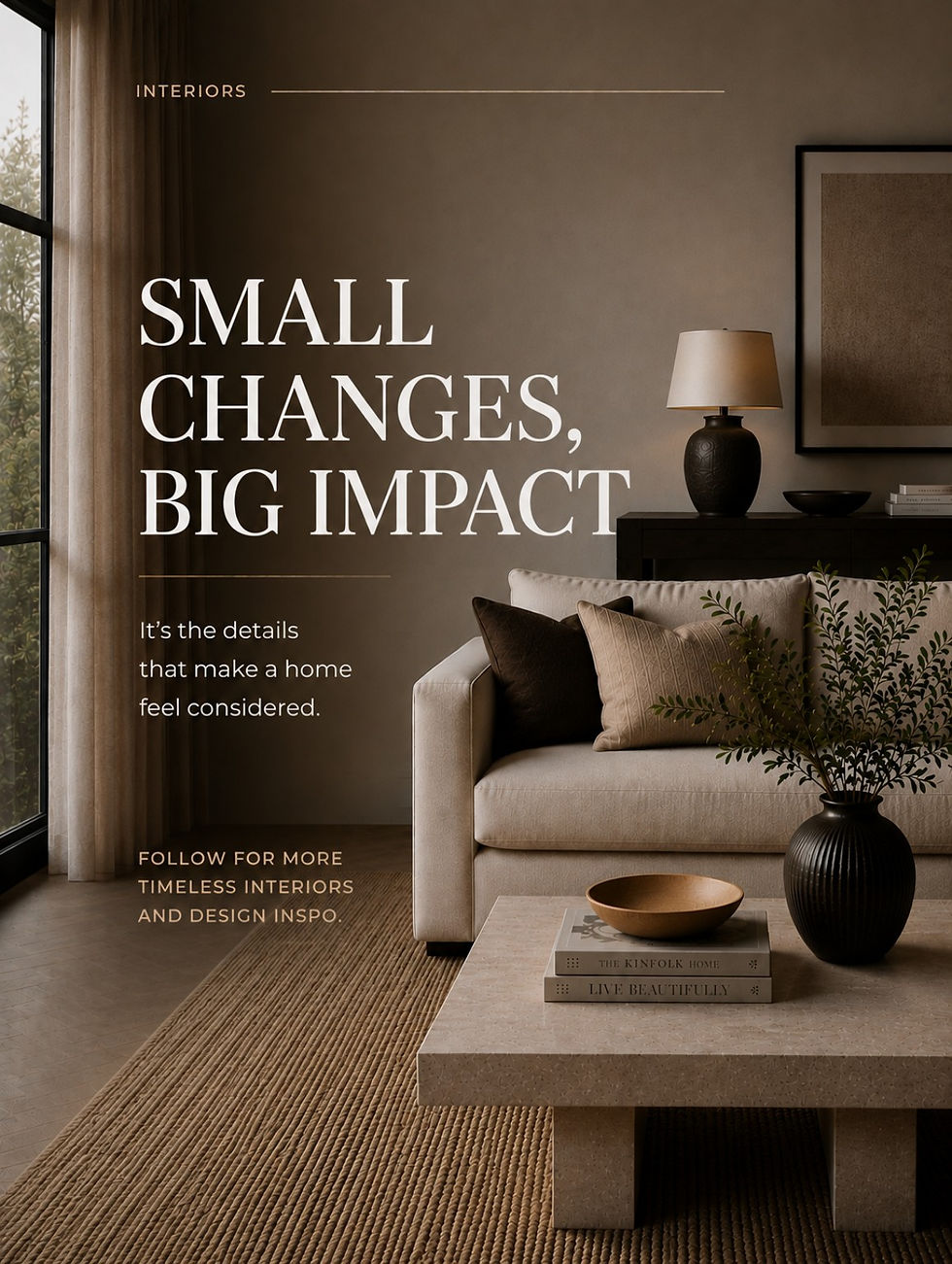
Did You Spot the Subtle Changes?
There is one more detail hidden in the images above. The room changes subtly as you move through the post.
Go back through the images and see what you notice. Which changes can you spot — and which of these three ideas would make the biggest difference in your own home? Tell us in the comments below.


Comments